Lagotto Romagnolo Grooming: Technical Guide to the 3 Styles (Show, Pet, Working)
Lagotto Romagnolo Grooming: Technical Guide to the 3 Styles (Show, Pet, Working)
The Lagotto Romagnolo is not just any “curly” dog. It is a working breed with a functional coat designed for thermal protection, waterproofing, and resilience to the external environment.
Its fur is not aesthetics: it is biological technology.
Cutting or shaping the coat without criteria often compromises the function for which the breed has been selected.
1. The Three Types of Cuts
👑 1. Show Cut
Objective: to comply with the ENCI/FCI standard.
Indicative Lengths
- Body: 3.5 – 4 cm
- Head: slightly longer
- Natural beard
- No geometric sculpting
The coat should appear rustic, curly, and natural, not “styled”.
The Lagotto should not resemble a Poodle.
🏡 2. Pet Cut
Objective: domestic management and comfort.
Indicative Lengths
- Body: 2 – 3 cm
- Head: 3 – 5 cm
- Legs slightly trimmed
This is the most common compromise for Lagottos living in apartments or urban settings.
It reduces tangles and maintenance without altering the breed’s nature.
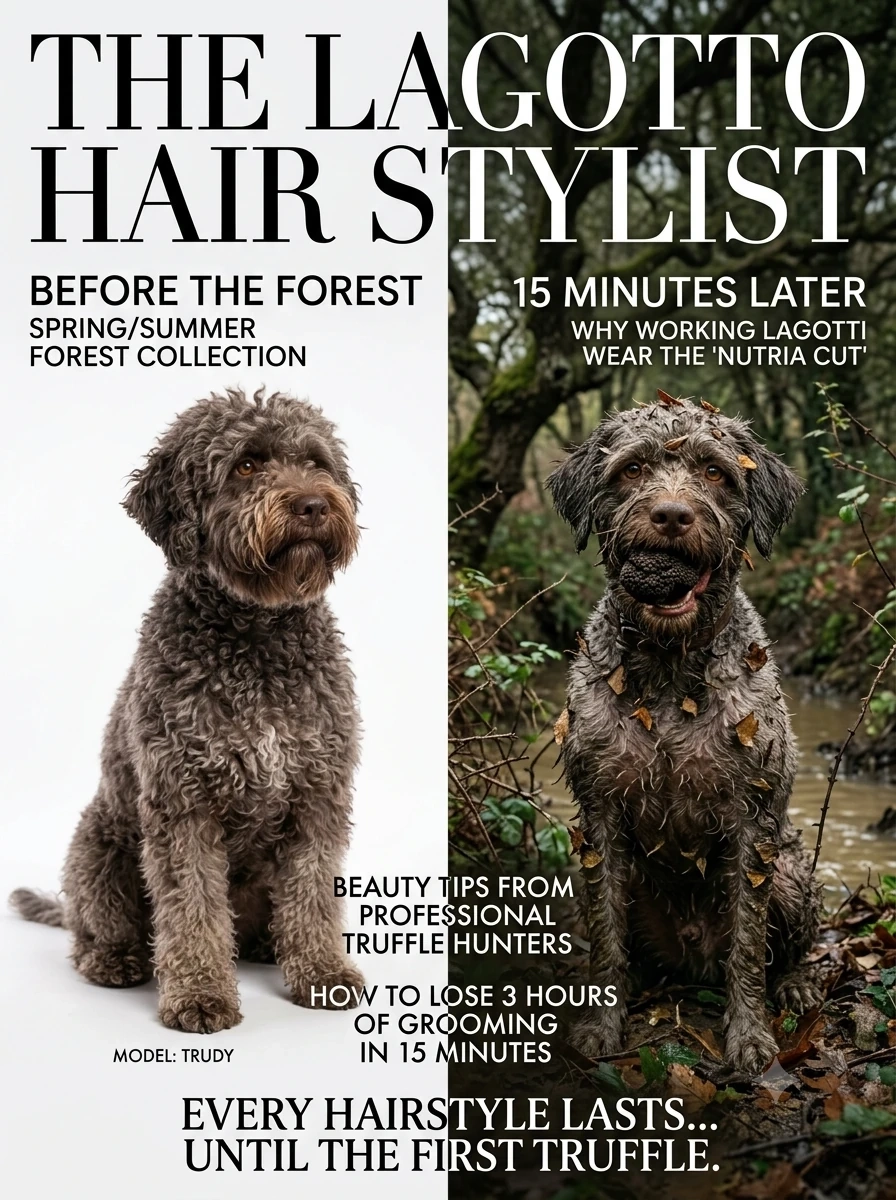
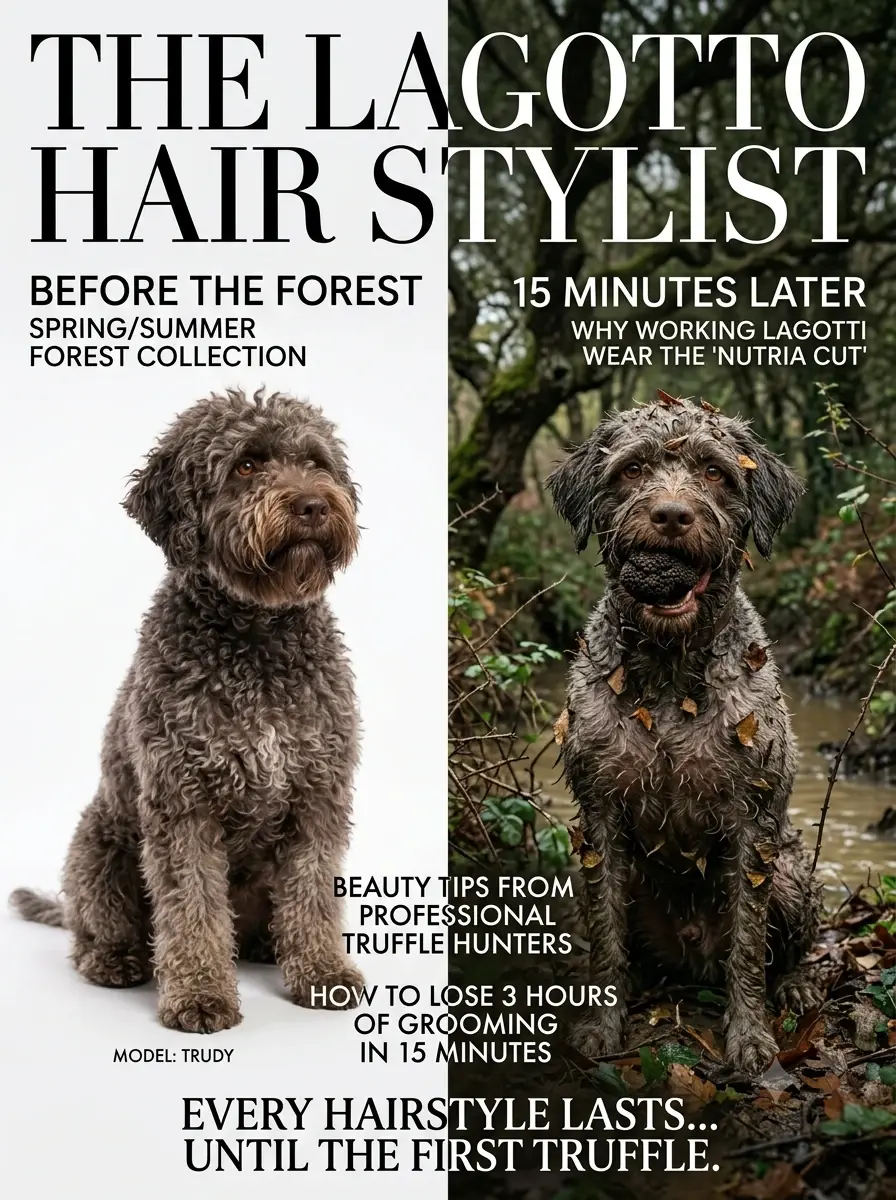
🌳 3. Working Cut / “Nutria Cut”
Objective: functionality in the woods.
Indicative Lengths
- Body: 0.8 – 1.5 cm
- Legs: short and functional
- Neck and chest lightened
- Head slightly longer for expressiveness
This is the typical cut for truffle-hunting Lagottos.
It is not aesthetic: it is undergrowth engineering.
It serves to:
- avoid the accumulation of thorns and seeds;
- reduce tangles and felting;
- improve drying after water and mud;
- ensure freedom of movement in brambles.
2. Coat Structure: A Fundamental Point
The Lagotto has:
- curly outer coat
- woolly undercoat
This combination creates thermal insulation and natural protection.
It is also a breed historically used in humid and aquatic environments, with a natural waterproofing component linked to the structure of the coat and sebaceous secretion.
👉 For this reason:
- excessive and repeated shaving may temporarily alter the quality of the fur;
- completely removing the coat reduces natural protection;
- the fur is not just “covering,” but a functional system.
3. Sun and Summer: Beware of Too Short Cuts
A common mistake is thinking that “shorter = cooler.”
In reality:
- an overly aggressive cut exposes the skin to UV rays;
- increases the risk of sunburn in light-furred or sensitive-skinned individuals;
- eliminates part of the natural thermal protection.
The Lagotto coat also functions as a sun barrier.
4. Frequency of Grooming
For a working Lagotto:
- 3-4 groomings a year is the real norm
- variable based on fur growth and intensity of use
Typically:
- spring
- early summer
- late summer
- winter
A working Lagotto does not “grow fur for aesthetics,” but for function.
5. DIY Grooming in Rural Settings
Many truffle hunters and owners with multiple dogs choose to groom themselves.
Typical Equipment:
- professional clipper
- set of blades
- straight and thinning scissors
- metal comb
- oil and blade maintenance
Average Investment:
250 – 400 €
With 3–4 groomings a year per dog, the investment is generally amortized in 1–2 years.
⚠️ Important: the first learning should happen under expert guidance (breeder or groomer specialized in the breed).
6. Most Common Mistakes in Grooming the Lagotto
Common mistakes observed in practice:
- using a hairdryer that “opens” the curl like in Poodles
- applying softening conditioners
- unnecessary aggressive brushing
- aesthetic sculpting of the coat
- total shaving down to zero
- keeping the fur too long (7–10 cm) promoting tangles
- relying on groomers not experienced with the breed
👉 The typical result is a Lagotto transformed into a “failed Poodle” or a dog difficult to manage over time.
7. Who to Trust with Your Lagotto
The correct question is not “Are you a groomer?”, but:
- Do you have specific experience with Lagotto Romagnolos?
- Do you know the difference between show, pet, and working cut?
- Do you have documented real cases of the breed?
- Do you comply with the ENCI/FCI standard?
A good professional does not just create a cut.
They create coherence between: breed → function → environment → coat
Conclusion
The grooming of the Lagotto Romagnolo is not fashion.
It is functional adaptation.
There is a cut for those living in the city, one for those exhibiting, and one for those working in the woods.
The difference is not aesthetic.
It is biological, practical, and behavioral.
And as often happens in the canine world:
the dog does not follow fashion. It follows function.
Sources
Author: Fogli Giantommaso
Publication Date: 2026-07-06
Rights and Attribution
Images, logos, and photographs are the property of their respective owners. Used for commentary purposes.
← Back to Lagotto