Ear infections in the Lagotto Romagnolo: knowing the ears to prevent suffering
Anyone who lives with a Lagotto Romagnolo sooner or later discovers one thing: those beautiful ears covered in curls need attention.
In our case we learned it with Basic, our Lagotto. He has suffered from recurring ear infections for years. The pattern is always the same: we think we have solved it, we skip one or two maintenance sessions, and we are back where we started. By now we know it well — but it cost us a few too many mistakes before we really understood.
It is not a flaw of the breed. It is a consequence of its characteristics.
The Lagotto is a dog bred to work in water and to search for truffles, with a curly, dense, continuously growing coat. These very characteristics that make it unique are what call for informed management.
Why is the Lagotto more prone to ear infections?
The Lagotto’s coat does not behave like that of many other breeds. Since it does not shed normally, the hair that grows inside the ear can stay in the canal. Over time that hair, together with earwax, can create a less ventilated environment and encourage moisture to linger.
An ear that is warm, poorly ventilated and holding organic material can become a favourable environment for yeasts and bacteria to multiply.
This does not mean that every Lagotto will have ear problems, but it does mean that the owner needs to be aware of this characteristic of the breed.
Prevention: a few minutes every week
One of the most common mistakes — and we made it too with Basic — is dealing with the ears only when the dog shows a problem.
In the Lagotto, ear care should become an ordinary habit, exactly like brushing the coat. A proper routine includes:
- checking the ears at least once a week
- gently cleaning the ear flap with wipes or specific products
- watching for any changes
- paying attention to excess hair in the canal
Nothing elaborate is required: a few minutes done regularly are usually enough. The problem is that when everything looks fine, it is easy to put it off. And then put it off again.
Look and smell: learn to know your Lagotto
It may sound like an odd piece of advice, but it is one of the simplest tools we have.
Look and smell.
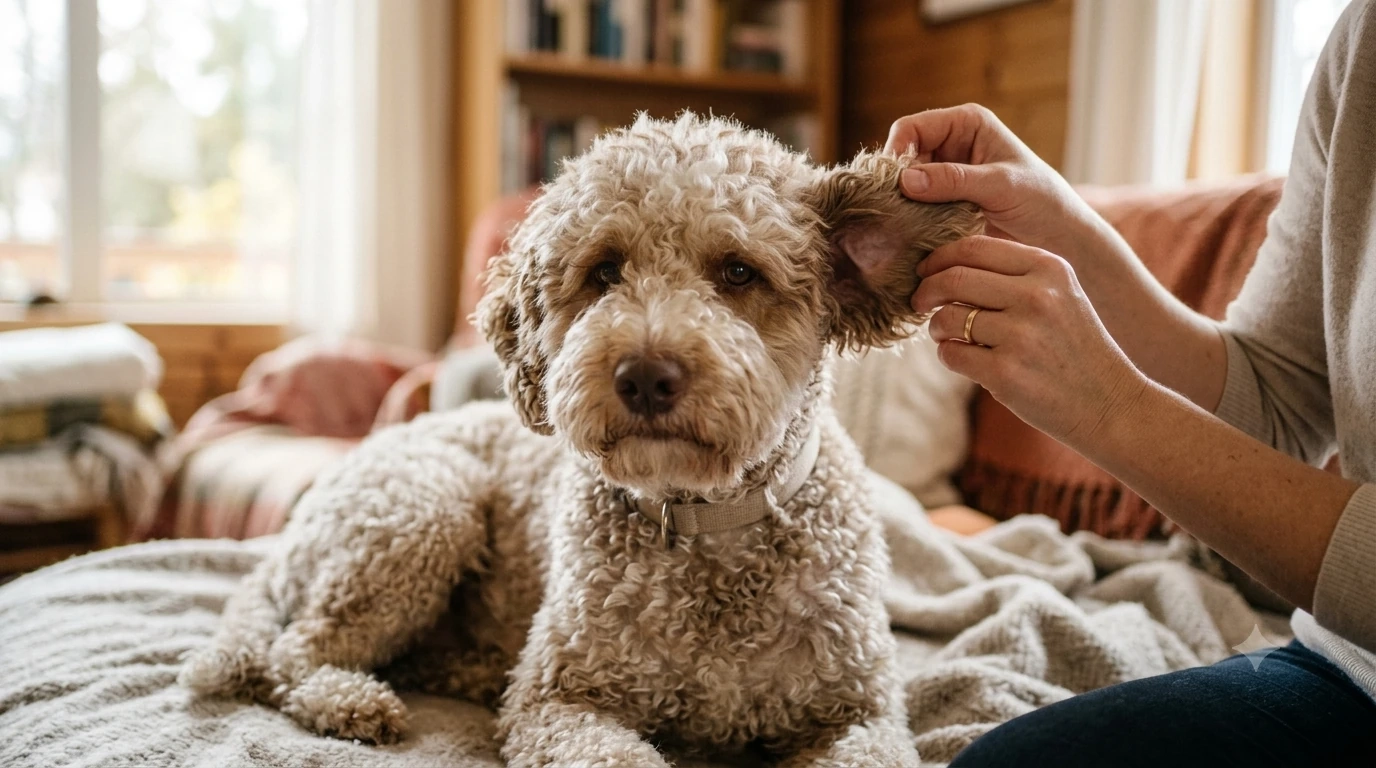
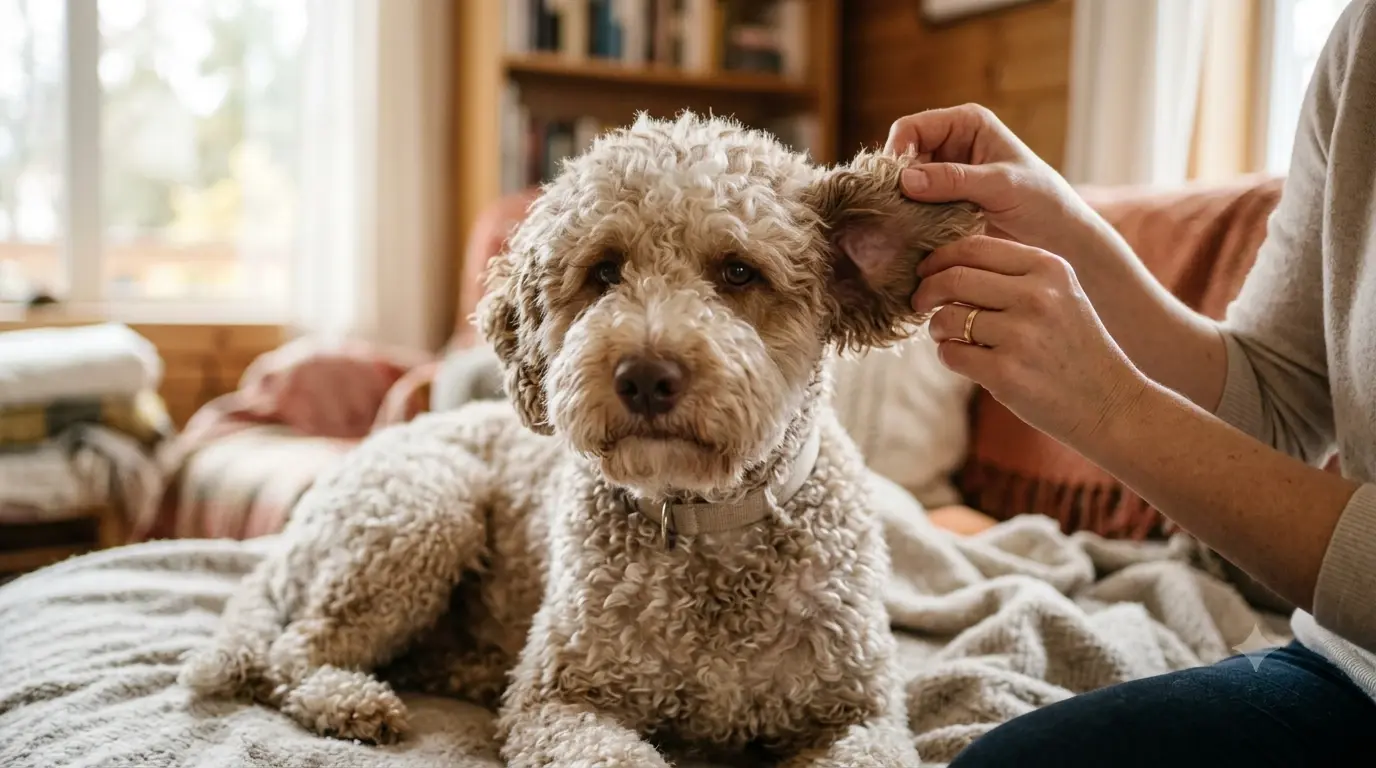
During a cuddle or a quiet moment together with your dog, lift the ears and take a look. Look at the colour of the skin, check for any unusual build-up and, above all, learn to recognise the normal smell of your Lagotto’s ears.
Every dog has its own natural smell. With Basic we learned that a change in smell always arrives before the other symptoms. Before he scratches, before he shakes his head — something has already changed. You just need to know how to recognise it.
A clear change, an intense or unpleasant smell, can be an early signal that something is shifting, even before obvious symptoms appear. Knowing your own dog means noticing problems sooner.
Hair in the ears: the most debated point
When the subject of hair in a Lagotto’s ears comes up, a discussion often follows.
In modern veterinary practice, so-called plucking — meaning the wholesale removal of hair with a pull similar to waxing — is a topic assessed with care, because an aggressive approach can irritate the ear canal.
But the Lagotto has a particular characteristic: the hair grows continuously and is not shed naturally as it is in other breeds.
The aim is not to empty the ear completely, but to stop excess hair from contributing to the trapping of earwax and moisture. A gentle approach consists of removing the excess hair gradually, a few hairs at a time, in a way closer to carding. It takes longer, but it lets you work calmly without turning ear care into a negative experience.
A Lagotto that has been used to having its ears handled since it was a puppy generally accepts this routine better. Basic took a while — but now he lets us handle it calmly.
Does trimming the outer hair solve the problem?
Trimming the outer hair can improve the look of the ear and help ventilate the flap. But often the problem is not the hair we can see, it is the hair we cannot.
In the Lagotto, the hair inside the ear canal keeps growing. Shortening only the outer part does not necessarily remove the material that can build up further in. It is a bit like tidying up the visible part without touching the hidden cause.
When the ear infection is already there
The situation changes completely once the problem has already started.
A serious ear infection can create a build-up made of altered earwax, inflammatory material, yeasts and bacteria, which stays trapped together with the hair in the canal. At that point it is no longer a matter of simple cleaning.
But above all there is one aspect that must never be forgotten: the dog is suffering.
An ear infection is not just a maintenance issue. The itching, the pain and the constant discomfort can change a Lagotto’s behaviour, make him less settled, less willing to play, and affect his quality of life. We see it with Basic every time we leave it too long: he becomes less patient, less playful. That is the signal that something is wrong.
When the dog is in pain, or the ear is blocked, it needs a veterinary assessment and treatment carried out with the proper instruments. Prevention exists precisely so that it never gets that far.
The help of ear cleaners
In some cases the vet may recommend specific products to help dissolve earwax and keep the ear canal cleaner. These products can be a genuine support, but they should not be used without judgement. Before using any particular product it is always important to talk it through with your vet.
Do not forget diet
Diet is not normally the direct cause of an ear infection, but in some individuals food sensitivities or inflammatory conditions can contribute to a predisposition to recurring problems. If a Lagotto often suffers from ear infections, treating the symptom alone is not enough.
We will devote a separate article to this subject, because the relationship between diet, inflammation and the health of the Lagotto deserves a closer look.
When to see the vet
It is important to ask for professional advice if the dog:
- often shakes its head
- scratches its ears continuously
- shows pain when touched
- has a persistent bad smell
- has discharge or a lot of earwax
- holds its head tilted
Acting early means sparing the dog suffering, and avoiding problems that are harder to manage.
A Lagotto’s ears are not a cosmetic detail. They are part of the dog’s daily health.
With Basic we learned it the hard way. There is no need to turn care into a complicated affair: all it takes is consistency. A cuddle, a check, a look and a sniff every week.
Because the best prevention tool is an owner who really knows their own dog.
Rights and Attribution
Images, logos, and photographs cited or shown in this article are the property of their respective owners. No rights are intended to be infringed: materials are used in relation to third-party sources and for commentary purposes.
← Back to Lagotto