Panfilia Wood: Ferrara's Secret Truffle Forest and Hidden Nature Gem
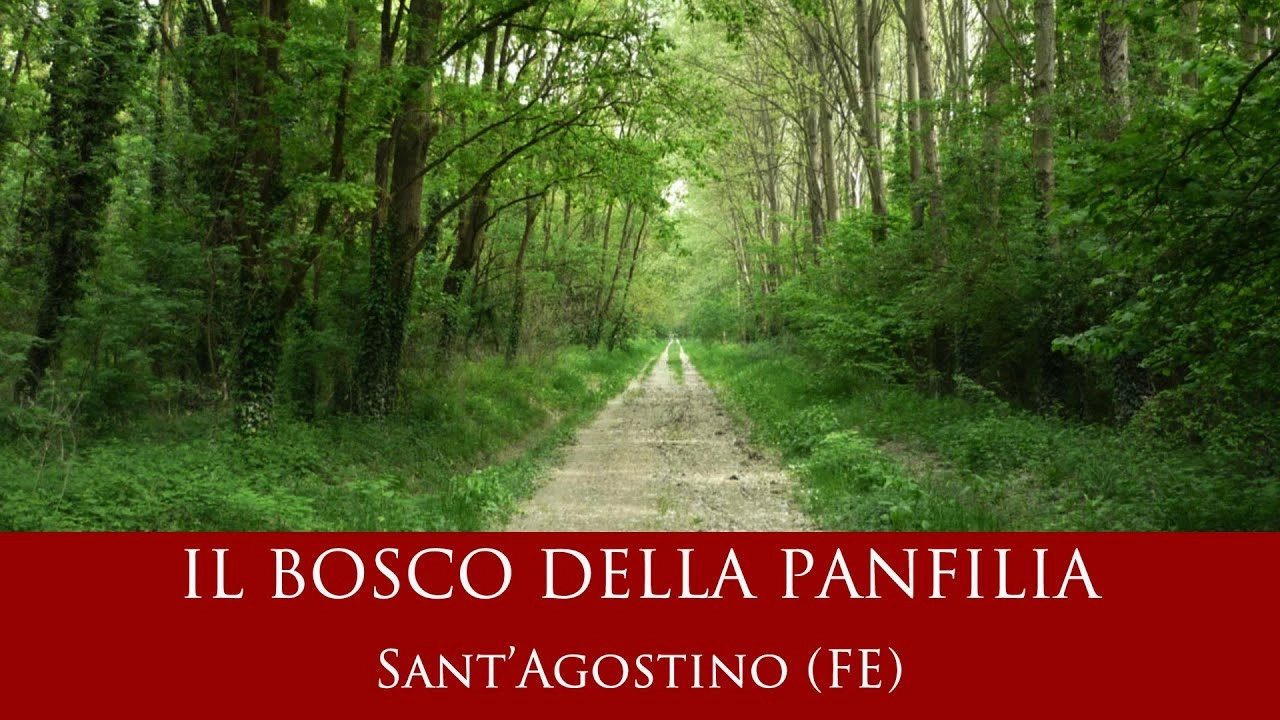
Imagine stepping into a forest where the air smells of damp earth and ancient oaks, where the silence is broken only by woodpeckers and the distant call of a golden oriole. A forest where, beneath your feet, one of the world’s most prized ingredients lies hidden — waiting for a trained nose to find it. This is Panfilia Wood — Bosco della Panfilia — 81 hectares of rare floodplain forest in a bend of the Reno River, between Bologna and Ferrara.
Most visitors to Emilia-Romagna stop in Bologna, Modena or Ferrara. Few discover Terre del Reno. Fewer still find themselves standing under the oaks of the Panfilia, breathing air that has smelled of truffles for centuries. This guide will help you find it — and make the most of a day (or more) in this corner of Ferrara’s countryside.
What is Panfilia Wood?
Panfilia Wood is a rare example of a lowland river floodplain forest — a type of habitat that once covered vast areas of the Po Valley but has almost entirely disappeared due to agriculture and drainage over the past two centuries. Today, the Panfilia is one of the few remaining examples, and its ecological importance is internationally recognized: it is a Site of Community Importance (SCI) within the European Natura 2000 network.
In 1971 the Italian Botanical Society classified it as “a site of remarkable vegetational importance, a unique biotope of its kind among hygrophilous forests”.
Today, the Panfilia is not just a forest — it is a living museum of biodiversity. Its oaks, poplars and ash trees create a habitat so rare that it is protected under European law. But for locals, it is also a symbol of resilience: a forest born from a flood, now thriving as a sanctuary for wildlife and a treasure trove for truffle hunters.
Born from a Flood
The forest has an unusual origin. In 1750, a catastrophic flood of the Reno River destroyed the villa and lands of a local nobleman, Marquis Panfilo Fachinetti. The flood was called the “rotta Panfilia” — Panfilo’s break — and the alluvial deposits left behind created the perfect conditions for the forest that grew in its place over the following centuries.
The Reno still floods periodically today, maintaining the rich, fine-grained soil that makes this forest so productive — both ecologically and gastronomically.
The Trees of Panfilia
The forest is composed of species typical of a periodically flooded lowland environment:
Dominant trees:
- Pedunculate Oak (Quercus robur) — the forest’s signature tree, and the primary host for white truffle mycorrhizae
- Narrow-leaved Ash (Fraxinus angustifolia) — characteristic of wet lowland forests
- White Poplar (Populus alba) — abundant in the floodplain areas
- Field Elm (Ulmus minor)
- Field Maple (Acer campestre)
- White Willow (Salix alba) — in the wettest zones near the river
Understorey shrubs: Blackthorn, hawthorn, dogwood, hazel, elder, privet — creating a dense, layered woodland structure typical of ancient forests.
The combination of these species — especially the Pedunculate Oak and White Poplar — is precisely why this forest produces such exceptional truffles. Both are among the preferred host trees for Tuber magnatum, the white truffle.
Truffles of the Panfilia — The “Food of the Gods”
Local tradition traces truffle gathering in the area back to Renaissance times, when its prized white truffles were sent to the Este Court in Ferrara. The tradition has continued unbroken for centuries.
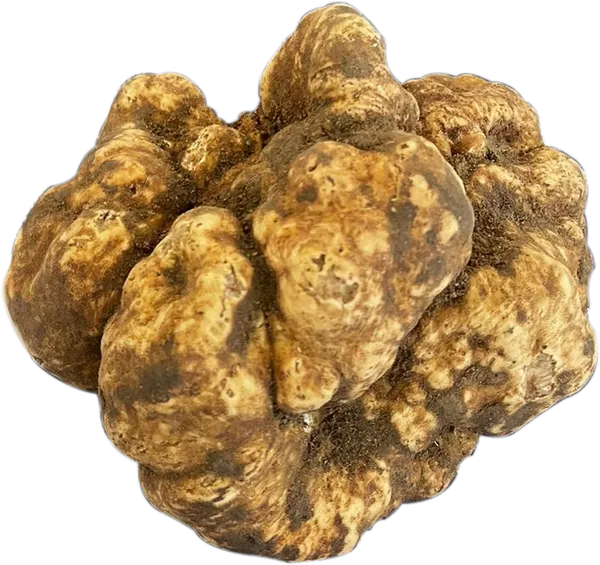
White Truffle — Tuber magnatum Pico
The most valuable truffle in the world. Smooth, pale ochre skin. Flesh ranging from cream to hazel brown with white veins. Aroma: intensely complex, with notes of garlic, honey, and aged cheese that no other ingredient can replicate.
The white truffle of the Panfilia is harvested between October and January by licensed local hunters (tartufai) working with their trained dogs — traditionally the Lagotto Romagnolo, a breed developed specifically for truffle hunting and now beloved worldwide.
Black Smooth Truffle — Tuber macrosporum Vittad.
Less famous than the white but highly regarded by connoisseurs. Its aroma is intense and persistent, often compared to the white truffle. Also present in the Panfilia, harvested in autumn and winter.
The Truffle Seasons at a Glance
| Species | Italian name | Season |
|---|---|---|
| Tuber magnatum | Tartufo Bianco Pregiato | Oct – 20 Jan |
| Tuber macrosporum | Tartufo Nero Liscio | Oct – 20 Jan |
| Tuber aestivum | Scorzone (Summer Truffle) | Jun – Aug |
Can You Find Truffles in Panfilia Wood?
A question almost every visitor asks — and it deserves a clear answer.
Truffle hunting in Italy is a regulated activity that requires an official licence (tesserino) issued by a regional authority after passing a formal examination. The licence is valid throughout Italy and must be renewed annually. Requirements and procedures vary by region.
In practice, the licensing process — with its examination, administrative steps and regional procedures — is not compatible with a short visit to Italy.
The best ways to experience truffle culture as a visitor:
- 🍽️ Restaurants — taste fresh truffle on pasta, eggs or cheese at local trattorie in autumn
- 🎪 The Truffle Festival — join the Sagra del Tartufo in Sant’Agostino, a tradition of over 40 years
- 🐕 Demonstrations — truffle associations occasionally organize educational events with trained dogs. Contact the Comune di Terre del Reno for current opportunities
For official information on the licence: Regione Emilia-Romagna — Tartufi
What you can do freely: walk through the very forest where these truffles grow, breathe the same damp oak-scented air that the tartufai have breathed for centuries, and then sit down to a plate of fresh pasta and let the truffle do the rest.
Visiting the Forest
Trails and Walking
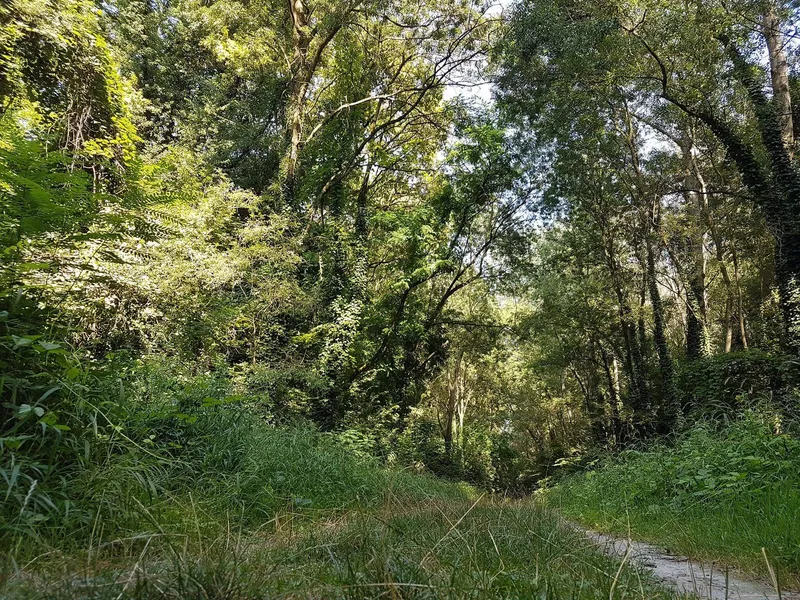
As you walk through the Panfilia, listen for the drumming of woodpeckers, the rustle of leaves underfoot, and the distant call of the golden oriole. In autumn, the air is rich with the scent of damp earth and fallen leaves — the same perfume that has lured hunters here for centuries.
Difficulty: Easy — flat terrain, no technical sections Duration: 1 to 3 hours depending on route Best seasons: Spring (wildflowers, birdsong), Autumn (colours, truffle season atmosphere) Worst conditions: After heavy rain — the main path can become muddy with deep puddles
Recommended parking: The large car park near the Palareno sports centre, Via 13 luglio 1884, Sant’Agostino. Local visitors generally recommend using this larger parking area rather than leaving vehicles near isolated trail entrances.
🐕 Visiting with a dog?
The Panfilia is a protected wildlife sanctuary (SIC/ZSC — Natura 2000). Current regulations restrict or prohibit dogs inside the nature reserve to protect resident wildlife. Check current rules with the Comune di Terre del Reno before visiting with a dog, as regulations may vary by area and season.
What to Look For
Beyond the trees themselves, the Panfilia rewards patient observation:
Birds: Green woodpecker, Great spotted woodpecker, Wryneck, Golden oriole, Cuckoo, Common buzzard, Kestrel, Sparrowhawk, Black kite, Barn owl, Tawny owl, Little owl, Long-eared owl, Turtle dove
Mammals: Fox, Polecat, Badger, Hedgehog, Coypu (along the river banks)
Reptiles and Amphibians: European pond turtle, Italian tree frog, Agile frog, Common toad, Great crested newt
Spring tip: Go early in the morning for the best birdwatching — the forest soundscape at dawn is extraordinary.
Cycling
The area around Sant’Agostino is excellent cycling territory — flat roads, quiet country lanes, and the scenic embankments of the Reno and the Cavo Napoleonico (a historic canal connecting the Reno and Po rivers).
A popular route follows the embankments from Sant’Agostino towards Mirabello, San Carlo and the countryside around Cento, connecting with the Burana cycling route. Total circuit: approximately 25–35 km, fully flat.
GPS tracks are available on Wikiloc and Komoot — search “Bosco della Panfilia” for several options.
Bike rental: There is currently no bike rental in Sant’Agostino itself. The nearest options are:
- Ferrara city centre (35 km) — multiple rental shops including Ricicletta, a cooperative with a large fleet
- Decathlon Ferrara — rental available at the store
- Consider renting in Ferrara and cycling to the Panfilia (one way ~35 km along quiet roads)
Food and Drink
In Emilia-Romagna, food is a love letter to the land. Here, truffles aren’t just an ingredient — they’re a celebration of the forest’s generosity. Sit down at a local trattoria in autumn, and you’ll taste the Panfilia in every bite.
What to Eat
🍂 Autumn — Truffle Season:
- Passatelli al tartufo — thick pasta strands made from breadcrumbs, egg and Parmigiano, served with fresh white truffle
- Fettuccine fresche al tartufo — handmade egg pasta with truffle, the simplest and perhaps finest preparation
- Uova al tartufo — fried eggs with shaved truffle — a humble dish elevated to extraordinary
- Fresh local cheeses with truffle shavings
🌿 Year-Round:
- Cappellacci di zucca ferraresi — pasta parcels filled with butternut squash, a Ferrara classic
- Salama da sugo — a unique Ferrarese cured meat, slow-cooked and served with mashed potato
- Local cured meats and hand-sliced salumi
- Fresh pasta with ragù — in Emilia-Romagna, this is never just “bolognese”
- Reale di maialino — braised suckling pig, a local speciality
Where to Eat
Trattoria La Rosa 1908 — Sant’Agostino The historic address for anyone visiting the Panfilia. Over a century of family-run tradition, impeccable handmade pasta, an excellent wine list and — in autumn — white truffle on almost everything. The atmosphere is warm, the portions generous, the zabaione made tableside unforgettable. Book ahead for autumn weekends.
Tip on dogs in restaurants: Italian law permits well-behaved dogs in most indoor public spaces, but individual restaurants set their own rules. Always call ahead. In summer, many country trattorie have outdoor terraces where dogs are more easily accommodated.
The Truffle Festival
Every year, Sant’Agostino hosts its Sagra del Tartufo — a tradition of over 40 years, usually held between late summer and early autumn. It brings together truffle hunters, cooks, and visitors for evenings of local food, wine, and the unmistakable scent of fresh truffle.
The wider area also offers a full calendar of local festivals: the Sagra della Zucca (pumpkin festival), the Sagra della Cotoletta (breaded cutlet — a local passion), and various summer evenings in Mirabello and San Carlo with live music and traditional cooking.
Day Trip Itinerary
| Time | Activity |
|---|---|
| 9:00 AM | Arrive in Sant’Agostino, park at Palareno, explore forest trails (1.5–2h) |
| 12:00 PM | Lunch at Trattoria La Rosa 1908 — order the pasta and whatever truffle is in season |
| 2:00 PM | Cycle to Mirabello (8 km) or explore the Cavo Napoleonico embankment |
| 4:00 PM | Visit Oasi Boscona if open (opening times vary — check locally) |
| Evening | Join the Sagra del Tartufo or a local festival if in season |
Getting There
By car:
- From Bologna: ~35 km northwest via SP568 toward Ferrara
- From Ferrara: ~25 km west via SS255
- From Modena: ~45 km northeast
By public transport: Sant’Agostino is served by regional buses from both Ferrara and Cento. Check Tper timetables for current routes. Journey from Ferrara: approximately 40–50 minutes. From Bologna: change in Cento. Public transport is limited — for flexibility, consider renting a bike in Ferrara and cycling to the forest.
By train + bike: The nearest railway stations are Ferrara (on the Bologna–Venice main line) and Poggio Renatico (a minor stop). From Ferrara, a beautiful day can be made cycling the 35 km to the Panfilia along the Burana cycling route.
Practical Information
| Location | Sant’Agostino, Comune di Terre del Reno, Province of Ferrara |
| Map | Open in Google Maps |
| Access | Free, year-round |
| Dogs | Check current rules with the Comune before visiting |
| Cycling | Permitted on designated paths |
| Best months | April–May (spring), October–November (truffle season) |
| Parking | Free, Via 13 luglio 1884 (Palareno) |
| Nearest city | Ferrara (25 km), Bologna (35 km) |
Useful Links
- 🏛️ Comune di Terre del Reno — local rules, permits, events
- 🍄 Sagra del Tartufo di Sant’Agostino — official truffle festival
- 🌿 Regione Emilia-Romagna — Tartufi — truffle regulations and calendar
- 🚲 Ferrara Terra e Acqua — cycling routes — bike itineraries in the province
- 🗺️ Wikiloc trails — Bosco della Panfilia — GPS tracks for hiking and cycling
A Final Word
Panfilia Wood isn’t a postcard-perfect attraction. There are no entrance fees, no guided tours in English waiting for you, no gift shops. What you find is a real forest, real silence, real food and real people who have lived alongside this woodland for generations.
It is a place where the rhythm of nature sets the pace — where the rustle of leaves and the scent of truffles remind you that some of Italy’s greatest treasures are still wild, still free, and still waiting to be discovered.
Sources
Author: Giantommaso Fogli — lake8.dev
URL: https://lake8.dev/blog/panfilia-wood-ferrara/
Publication date: 2026-06-07
Diritti e attribuzioni
Immagini, loghi e fotografie citati o mostrati in questo articolo sono di proprietà dei legittimi titolari. Non si intende violare alcun diritto: i materiali sono utilizzati in relazione a fonti terze e con finalità di commento.
Rights and Attribution
Images, logos, and photographs cited or shown in this article are the property of their respective owners. No rights are intended to be infringed: materials are used in relation to third-party sources and for commentary purposes.
← Back to blog